The Einstein Tower: Preserving an Architectural Icon with KEIM Soldalit

The Einstein Tower in Potsdam, Germany, is one of the most distinctive buildings of the early modern era.
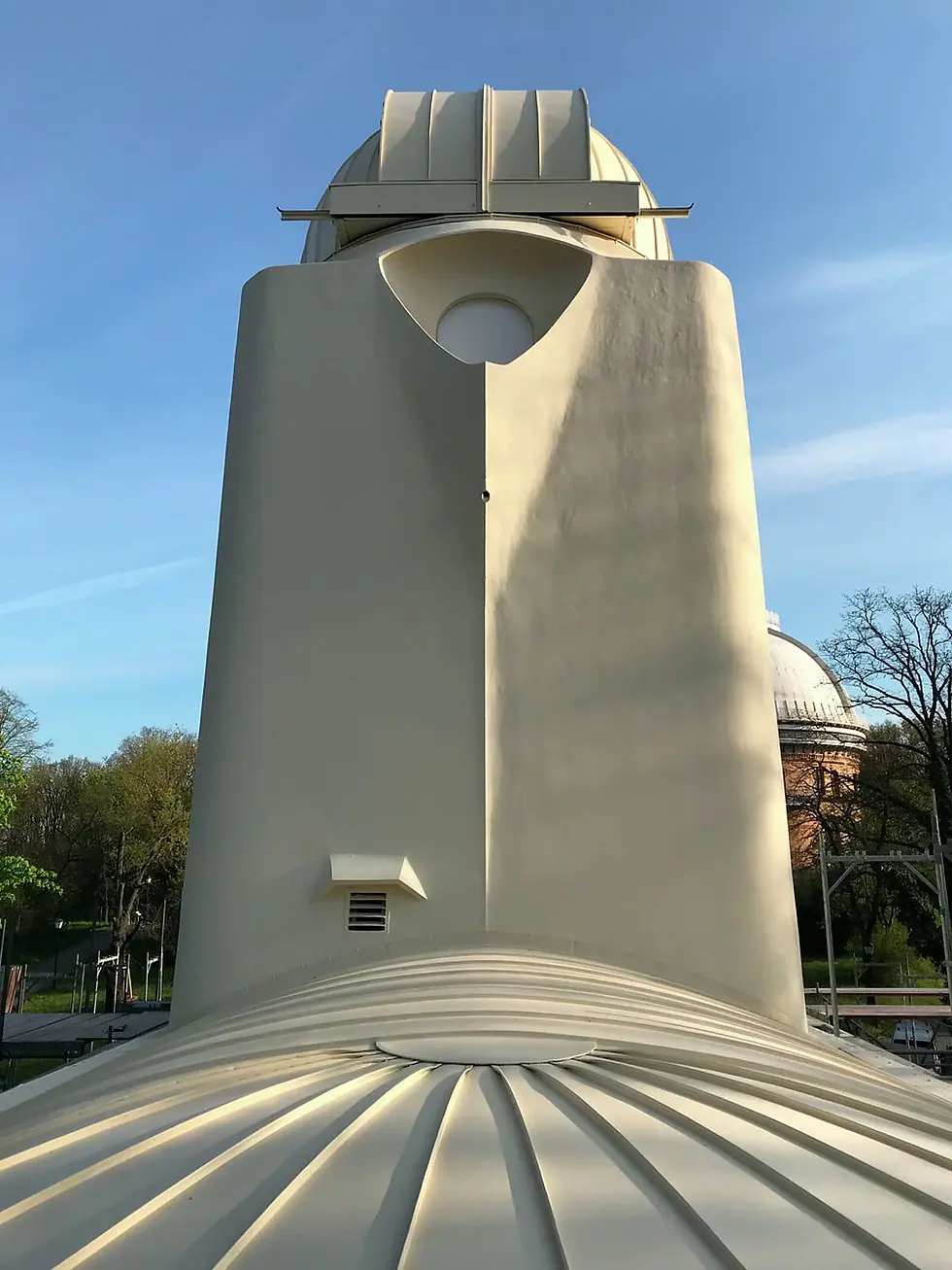
Designed by architect Erich Mendelsohn, the observatory was created to support astrophysicist Erwin Finlay Freundlich’s research into Albert Einstein’s theory of relativity. Its curved walls, sculptural form and integrated solar telescope made it unlike almost anything built before it.
More than a century later, preserving this experimental building has required the same level of care and innovation that shaped its original design.
Architecture Shaped by Science
The Einstein Tower was designed around a specific scientific purpose: observing the sun and studying changes in light that could help test Einstein’s general theory of relativity.
Rather than creating a conventional building and adding scientific equipment later, Mendelsohn designed the architecture, telescope and research spaces as one connected system.
The result is a building that appears fluid and almost alive. Its rounded surfaces, softened corners and sweeping base give the impression that the tower was sculpted rather than constructed.
This expressive form helped establish the Einstein Tower as an icon of modern architecture. However, it also made the building particularly difficult to maintain.

A Challenging Building to Preserve
Although the tower appears to be formed from a single continuous material, its construction was more complicated. It combined masonry, rendered surfaces and other building methods to achieve the smooth, sculptural appearance Mendelsohn envisioned.
Over time, the building’s curved surfaces and complex details became vulnerable to weathering.
Rainwater, temperature changes, frost, cracks and movement all placed pressure on the exterior. Previous repairs and coating layers also added to the complexity of the structure.
A major refurbishment was completed between 1997 and 1999. However, further damage eventually made another restoration necessary.
For a building of this significance, the goal could not simply be to cover the surface and make it look new. The restoration needed to protect the tower while preserving its historic character, texture and architectural form.
A Mineral Finish for a Mineral Building
KEIM Soldalit was used as part of the restoration of the Einstein Tower carried out by the Wüstenrot Foundation.
Soldalit is a mineral silicate façade paint designed for use on mineral and previously painted surfaces. Rather than creating a heavy plastic film over the building, it provides a highly breathable finish that allows moisture vapour to move through the wall.
This was important for a complex historic façade where trapped moisture could contribute to future deterioration.
The mineral matt appearance of Soldalit also helps preserve the subtle surface texture of the tower. Instead of flattening the building beneath a glossy or artificial coating, the finish supports the original architectural form.
On a heritage project like the Einstein Tower, paint is not simply a colour choice. It must work with the existing substrate, protect repaired surfaces and remain visually appropriate to the building.

Preserving the Original Vision
Heritage conservation does not mean leaving a building untouched.
When cracks widen, water enters or render begins to detach, the original architecture becomes increasingly vulnerable. Careful intervention is often necessary to protect the very features that make a building significant.
The restoration of the Einstein Tower demonstrates how traditional craftsmanship, technical research and compatible mineral materials can work together.
More than 100 years after it was designed, the tower still feels bold and futuristic. It remains a powerful meeting point between architecture, astronomy, engineering and physics.
Its survival is a reminder that experimental buildings require ongoing care. With considered restoration and materials such as KEIM Soldalit, Mendelsohn’s extraordinary vision can continue to be experienced by future generations.


Comments